
You’ve invested in a high-potency recovery balm, but are you actually getting the relief you paid for? In the world of cannabinoids, application is just as important as concentration. The "secret" to professional-grade recovery isn't just about what’s in the bottle, it’s about how much of it actually reaches your receptors.
To truly unlock the benefits of hemp, you have to bypass the body's most sophisticated security system: the skin barrier. Here is the clinical breakdown on how to maximize CBD and CBG absorption for faster, deeper, and more effective relief.
The Science of the Skin Barrier: Why Bioavailability Matters in Topicals
Your skin is designed to keep things out. From environmental toxins to excess water, your body’s largest organ is a fortress.
The Stratum Corneum: Your Body’s Natural Defense
The outermost layer of the epidermis, known as the stratum corneum, consists of dead skin cells (corneocytes) embedded in a lipid-rich matrix. Think of it like a brick-and-mortar wall. Cannabinoids like CBD and CBG are lipophilic (fat-loving), which means they can get "stuck" in this fatty outer layer rather than traveling deeper into the tissue where the pain resides.
How Cannabinoids Interact with Localized Receptors
Once a cannabinoid successfully permeates the stratum corneum, it seeks out the Endocannabinoid System (ECS). The skin is uniquely dense with CB1 and CB2 receptors.
- CB1 receptors are primarily located on sensory nerve fibers, managing pain signaling.
- CB2 receptors are found in immune cells and keratinocytes, regulating inflammation.
Transdermal vs. Topical: Understanding the Delivery Depth
While standard "topicals" (lotions and salves) act locally on these receptors, "transdermal" products are formulated with specific chemical enhancers to push cannabinoids all the way into the bloodstream for systemic relief. For targeted muscle recovery, we focus on maximizing local bioavailability—getting the highest concentration possible into the underlying muscle and joint tissue.
Tip #1: Optimize Skin Temperature and Pore Permeability
Absorption is a game of physics. One of the simplest ways to increase the "flux" (rate of absorption) of a cannabinoid is to increase skin temperature.
- The Warm Shower Strategy: Applying your recovery balm immediately after a warm shower or bath is a clinical game-changer. Warmth causes vasodilation—the widening of blood vessels—which increases local circulation and "softens" the lipid matrix of the stratum corneum.
- Opening the Pores: While "opening pores" is a bit of a misnomer (pores don't have muscles to open/close), heat reduces the viscosity of the skin’s natural oils, making it significantly easier for a CBD/CBG salve to glide through the follicular pathways and reach the dermis.
Tip #2: Leverage Botanical Permeation Enhancers
Nature has already provided the "keys" to unlock the skin barrier. These are known as terpenes and chemical permeation enhancers (CPEs).
Terpenes as Natural Penetration Facilitators
Research published in PMC (2025) shows that certain terpenes can increase the skin permeation of lipophilic drugs by over 200-fold.
- Menthol: Acts as a cooling agent and a powerful penetration enhancer by temporarily disrupting the skin's lipid structure.
- Limonene & Pinene: These citrusy and piney terpenes act as solvents that help cannabinoids "sneak" past the protective outer layer.
How Essential Oil Carriers Bypass the Lipophilic Barrier
Bloom & Stem products utilize carrier oils like Jojoba and MCT oil. Unlike heavy mineral oils, these plant-based lipids mimic the skin's natural sebum, allowing the cannabinoids to be "carried" into the tissue rather than sitting on top of the skin.
Tip #3: Use the "Occlusion" Method for Deep-Seated Discomfort
If you are dealing with chronic joint stiffness or deep muscle knots, simple rubbing might not be enough. Professional therapists often use occlusion.
- Create a Physical Seal: After applying a thick layer of extra-strength CBD/CBG salve, cover the area with a bandage or a light compression sleeve.
- Why it Works: Occlusion prevents the evaporation of the product and increases the hydration of the stratum corneum. This "forces" the cannabinoids to move in the only direction available: down.
Tip #4: The Power of the 1:1 Ratio: Synergizing CBD and CBG
Recent 2026 science-backed reports confirm that the "Entourage Effect" is even more potent on the skin.
| Cannabinoid | Primary Benefit | Receptor Interaction |
| CBD (Cannabidiol) | Anti-inflammatory & Antioxidant | Indirect (Modulator) |
| CBG (Cannabigerol) | Neuroprotectant & Nerve Pain | Direct (CB1/CB2 Agonist) |
The 50/50 Advantage: By using a balanced mix, you are engaging the ECS through multiple pathways simultaneously. This synergy increases the "therapeutic window," meaning you get more relief with less total product used.
Tip #5: Mechanical Facilitation: The Proper Application Technique
Most people apply CBD like they apply sunscreen—a quick smear and they’re done. To maximize absorption, you need a mechanical assist.
- Exfoliate First: Once or twice a week, use a gentle scrub on your "hot zones" (knees, elbows, lower back). Removing dead skin cells reduces the thickness of the barrier your CBD has to cross.
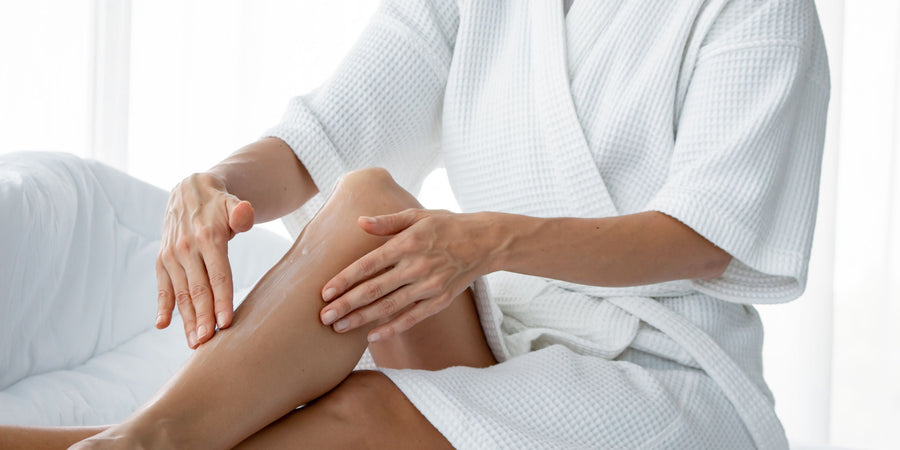
- The 60-Second Massage: Massaging the topical into the skin for at least one minute does two things: it generates localized heat (Tip #1) and manually pushes the molecules into the follicular openings.
- Target the "Thin" Skin: For faster absorption, apply to areas where the skin is thinner and more vascular, such as the inside of the wrists, temples, or behind the knees.
Common Pitfalls: Why Your CBD Cream Might Not Be Working
If you’re not feeling the results, one of these three culprits is likely to blame:
- Low Potency (The Concentration Gradient): Diffusion relies on a "high-to-low" concentration flow. If your cream only contains 500mg, there isn't enough pressure to push the cannabinoids through the skin barrier. This is why Bloom & Stem offers potencies up to 20,000mg.
- Synthetic Fillers: Products with high amounts of wax, parabens, or plasticizing agents can actually create a second barrier, trapping the CBD inside the cream instead of letting it enter your skin.
- Patience: Topicals take time to travel. Don't judge the efficacy until at least 45 minutes after application.
Frequently Asked Questions
Does heat help CBD absorb into the skin faster?
Yes. Heat induces vasodilation and lowers the viscosity of skin lipids, making it significantly easier for cannabinoids to penetrate.
Can I use a heating pad after applying a CBD CBG salve?
Yes, but with caution. A heating pad can enhance absorption, but you should never use high heat with products containing high concentrations of menthol or camphor, as this can lead to skin irritation or burns. Use low-to-medium heat for 10 minutes.
How long does it take for topicals to reach the CB2 receptors?
Depending on the application method and the use of enhancers (like menthol), initial relief typically begins within 15–20 minutes, with peak saturation occurring between 45 and 90 minutes.
Maximize Your Results with Bloom & Stem’s High-Potency Recovery Line
At Bloom & Stem, we don't just sell CBD; we engineer recovery solutions. Our formulas are built on the science of bioavailability—pairing high-potency extracts with botanical enhancers like menthol and arnica to ensure that when you apply our products, they actually work.
Ready to see the difference that professional-grade absorption makes?
Shop our High-Potency CBD + CBG Collection