
How to Use CBD · CBD Oil Guides
The most complete form of hemp extract — what's actually in it, how it compares to the alternatives, and how to pick the right strength.
If you've shopped for CBD, you've hit the wall of jargon: full spectrum, broad spectrum, isolate. They sound technical, but the difference is simple once someone explains it plainly — and it genuinely matters for which product is right for you. This guide breaks down what full spectrum CBD oil actually is, why people choose it, how it stacks up against the alternatives, and how to pick the right strength without overthinking it.
What Is Full Spectrum CBD Oil?
Full spectrum CBD oil is a hemp extract that keeps the full range of compounds naturally found in the plant. That means it contains far more than just CBD:
- CBD (cannabidiol) — the main cannabinoid, non-intoxicating
- Minor cannabinoids — like CBG, CBN, and CBC
- Terpenes and flavonoids — the plant's aromatic and supporting compounds
- A trace of THC — under 0.3% by law, far too little to cause a high
It's the least processed, most complete form of CBD oil — essentially the whole hemp plant profile captured in a bottle. That completeness is the entire point, and it's what sets it apart from the other two types.
The Entourage Effect: Why "Full" Matters
The reason people seek out full spectrum comes down to a concept called the entourage effect. The idea, supported by a growing body of research, is that hemp's compounds work better together than any single one does alone — CBD, the minor cannabinoids, and the terpenes acting in concert rather than in isolation.
Because full spectrum oil keeps that entire cast of compounds intact — including the trace THC — supporters consider it the format most capable of delivering the entourage effect. In plain terms: the whole plant, working together, is the selling point.
Full Spectrum vs. Broad Spectrum vs. Isolate
These are the three forms of CBD, and the difference is really about how much of the plant is left in.
| Full Spectrum | Broad Spectrum | Isolate |
|---|---|---|
| All cannabinoids + terpenes | Most cannabinoids + terpenes | Pure CBD only |
| Trace THC (under 0.3%) | THC removed | No THC |
| Strongest entourage effect | Entourage effect, THC-free | No entourage effect |
| Least processed | More processed | Most processed |
| Best for: the full profile | Best for: avoiding THC | Best for: CBD only |
Choose full spectrum if…
You want the most complete, natural hemp profile and the strongest shot at the entourage effect, and you're not concerned about trace THC or drug testing.
Choose broad spectrum if…
You want the benefits of multiple cannabinoids and terpenes but need to avoid THC — whether for peace of mind, sensitivity, or testing concerns.
Choose isolate if…
You want pure CBD and nothing else, or you must avoid all other cannabinoids entirely.
What People Use Full Spectrum CBD Oil For
People reach for full spectrum CBD oil for the same range of wellness reasons they use CBD generally — everyday balance, managing everyday stress, comfort, and supporting a normal sense of calm and rest. The appeal of the full spectrum version specifically is the belief that the complete compound profile makes it more effective than an isolated single-compound product.
As always, CBD is a wellness supplement, not a medicine — it's not intended to diagnose, treat, or cure any condition, and results vary from person to person.
How to Choose the Right Strength
This is where most people get stuck. CBD oil strength is shown as the total milligrams of CBD in the bottle — so a 2000mg bottle is more concentrated than a 1000mg bottle of the same size, giving you more CBD per drop.
- 500mg – 1000mg — a great starting point for newcomers and everyday wellness
- 1500mg – 2000mg — a mid-range step up for regular users wanting more per serving
- 3000mg and up — high potency for experienced users or stronger needs
The golden rule with any CBD oil is start low and go slow: begin with a small serving, give it time, and adjust based on how you feel. A higher-strength bottle simply means you need fewer drops to reach the same serving — often better value over time.
How to take CBD oil
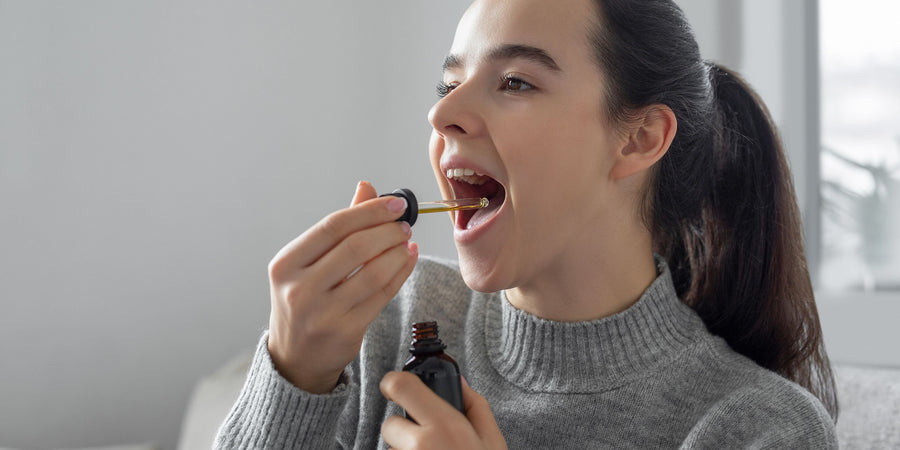
Most people take CBD oil sublingually — placing the drops under the tongue, holding for 30–60 seconds, then swallowing. This lets some of the CBD absorb through the tissue under the tongue. You can also add it to food or a drink, though that routes it through digestion and may take longer to take effect.
Popular full spectrum options
Full Spectrum CBD Oil — Lower Strength
A gentle entry point for everyday wellness and first-time users.
Shop CBD oilsFull Spectrum CBD Tincture
A balanced mid-strength oil for consistent daily use.
Browse tincturesFull Spectrum 20K CBD Oil
A whole-plant, high-potency oil for experienced users and stronger needs.
Shop 20K oilCBD + CBG Tincture
A dual-cannabinoid blend for those who want more of the plant's profile.
Shop CBD+CBGHow to Buy Full Spectrum CBD Oil (Without Getting Burned)
Quality varies enormously in this category. Before you buy any full spectrum CBD oil, check for:
- A third-party Certificate of Analysis (COA) — confirming the CBD content, verifying THC is under 0.3%, and screening for pesticides, heavy metals, and solvents
- Clearly stated milligrams — the total CBD should be on the label, not hidden behind vague "hemp extract" wording
- US-grown hemp and clean extraction — CO2 extraction is the industry standard for clean, solvent-free oil
- Honest marketing — avoid any brand claiming to cure diseases; that's both a quality and a legal red flag
The Bottom Line
Full spectrum CBD oil is the most complete, least processed form of CBD — the whole hemp profile, including the minor cannabinoids, terpenes, and a trace of THC that together drive the entourage effect. It's the go-to choice if you want the full plant experience and aren't worried about THC or drug testing. Pick a lab-tested oil at a sensible strength, start low and go slow, and you'll have the version of CBD that keeps the most of what the plant offers.
Frequently Asked Questions
What is full spectrum CBD oil?
Full spectrum CBD oil is a hemp extract that contains the full range of compounds naturally found in the plant — CBD, minor cannabinoids like CBG, CBN, and CBC, terpenes, flavonoids, and a trace amount of THC (under 0.3% by law). It's the least processed form of CBD oil, and the complete compound profile is what people mean by the entourage effect.
What is the difference between full spectrum and broad spectrum CBD oil?
The main difference is THC. Full spectrum keeps the whole natural hemp profile, including trace THC under 0.3%. Broad spectrum contains the other cannabinoids and terpenes but has had the THC removed through extra processing. Both can support the entourage effect; full spectrum is chosen for the most complete profile, broad spectrum for those who want to avoid THC.
Will full spectrum CBD oil get me high?
No. The THC in full spectrum CBD oil is limited to under 0.3%, which is far too little to produce a high at normal serving sizes. It's included to support the entourage effect, not to intoxicate. If you're concerned about any THC at all, a broad spectrum or isolate product is the better choice.
Can full spectrum CBD oil make you fail a drug test?
It's possible. Because full spectrum products contain trace THC, regular use could in some cases produce a positive result on a drug test that screens for THC. If you're subject to drug testing, choose a broad spectrum or isolate CBD oil instead of full spectrum.
What strength of full spectrum CBD oil should I get?
Strength is shown as total milligrams of CBD in the bottle — common options are 500mg, 1000mg, 2000mg, and 3000mg. Lower strengths like 500–1000mg suit newcomers and everyday wellness, while higher strengths like 2000–3000mg give more CBD per drop for experienced users or stronger needs. Start low, go slow, and adjust based on how you respond.
Is full spectrum CBD oil better than isolate?
Neither is universally better. Full spectrum offers the complete hemp profile and the entourage effect, which many people prefer. Isolate is pure CBD with no other cannabinoids or THC, which suits people who want CBD alone or must avoid THC entirely. The right one depends on your goals and whether THC is a concern for you.
Keep Reading
These statements have not been evaluated by the Food and Drug Administration. This product is not intended to diagnose, treat, cure, or prevent any disease. Full spectrum products contain trace THC (under 0.3%) and may cause a positive drug test. This article is informational only and not medical advice. Consult a healthcare provider before use if you are pregnant, nursing, or taking other medication.