
How to Use CBD · Skin & Everyday Care
CBD Cream for Eczema: Does It Actually Help Itchy, Irritated Skin?
Of all the ways people use CBD topically, skin conditions like eczema have some of the more encouraging research. Here's the honest picture — and how to use it safely.
If eczema has you chasing the itch — the dryness, the redness, the flares that won't quit — you've probably wondered whether a CBD cream for eczema could help. Here's the good news: unlike some CBD uses where the evidence is thin, skin conditions like eczema are an area where topical CBD research is genuinely promising. This guide walks through what the studies actually show, how CBD is thought to calm irritated skin, how to use it safely (this matters more with eczema than most conditions), and how to choose the right product.
What Eczema Is — and Why CBD Is of Interest
Eczema (most commonly atopic dermatitis) is a chronic inflammatory skin condition marked by itching, dryness, redness, and a weakened skin barrier that lets moisture out and irritants in. It comes and goes in flares, and the relentless itch-scratch cycle is often the worst part.
Here's the interesting part: your skin has its own endocannabinoid system — receptors right in the skin that help regulate inflammation, itch, and barrier function. That's the biological reason researchers have taken cannabinoids like CBD seriously for eczema, rather than it just being wellness hype.
Does CBD Cream Actually Help Eczema? What the Research Shows
This is one of the more encouraging corners of topical CBD research — though it's still early. Several small human studies point in a positive direction:
- A pre-post study of topical CBD in atopic dermatitis patients reported statistically significant improvement in itching (pruritus), redness, skin thickening, and other measures.
- A study of a CBD + CBG ointment applied daily for eight weeks found reduced itching, better skin hydration, and improved quality of life, with remission of lesions in some patients.
- A 2026 clinical study of a CBD-based cream for atopic-prone skin in adults and children found it well tolerated with no significant adverse events, and improved quality-of-life scores.
The consistent theme: topical CBD (often paired with CBG) appears to help with the itch, dryness, and irritation of eczema, largely through anti-inflammatory action plus the moisturizing effect of the cream itself. Researchers are clear, though, that these are small studies and large-scale trials are still needed.
How CBD Soothes Irritated Skin
Calming inflammation and itch
Applied to the skin, CBD interacts with the cannabinoid receptors in your skin's endocannabinoid system, where it's studied for calming the inflammatory response and the itch signaling behind an eczema flare. Reducing that itch is a big deal, because breaking the itch-scratch cycle is central to letting eczema skin heal.
Moisturizing and supporting the skin barrier
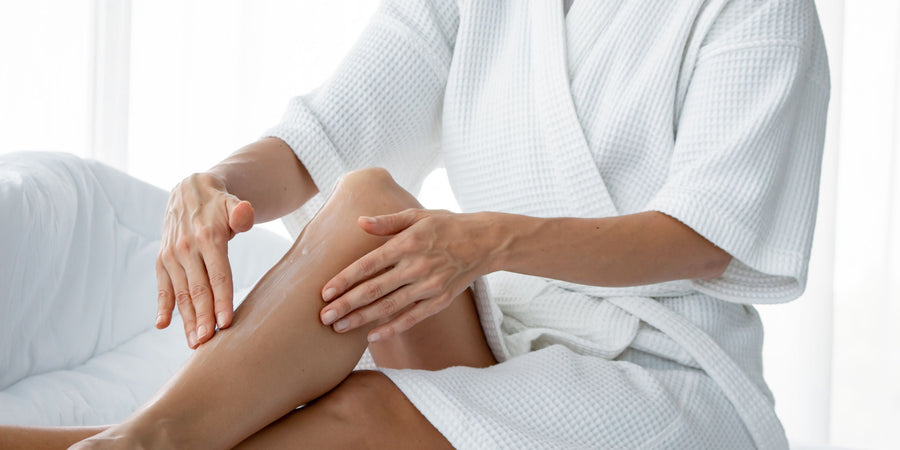
Don't overlook the base. A good CBD cream, salve, or balm is also a moisturizer — and because eczema involves a compromised skin barrier, hydration is a cornerstone of managing it. Part of the benefit you feel comes from keeping the skin moisturized and protected, alongside whatever the CBD contributes.
The CBD + CBG combination
It's worth noting that some of the most encouraging eczema studies used CBD together with CBG, another non-intoxicating cannabinoid that also binds to skin cannabinoid receptors. The pairing is increasingly used in dermatology-focused formulas — a point in favor of dual-cannabinoid products.
How to Use CBD Cream for Eczema Safely
Safety matters more with eczema than with most topical uses, because eczema skin is sensitive and easily irritated. Follow these:
- Patch-test first. Apply a small amount to a small area and wait 24 hours before wider use — sensitive skin can react to any new product.
- Apply to intact or healing skin. Avoid rubbing it into open, cracked, or weeping areas, which can sting and worsen irritation.
- Use it on clean, slightly damp skin. Applying moisturizer (including a CBD cream) to slightly damp skin helps lock in hydration.
- Choose simple, fragrance-conscious formulas. Fragrances and some essential oils are common eczema triggers — the fewer potential irritants, the better.
- Be consistent. Skin benefits build with regular use; apply daily rather than only during bad flares.
Can CBD Cause or Worsen Eczema?
A fair question, and worth answering plainly: CBD itself isn't known to cause eczema. But any topical can irritate eczema-prone skin — and when that happens, it's usually down to other ingredients like fragrance, alcohol, or essential oils rather than the CBD. This is exactly why patch-testing and choosing simple formulas matter so much. If a product makes your skin worse, stop using it.
How to Choose a CBD Product for Eczema
| Look for | Why it matters |
|---|---|
| Third-party lab tested (COA) | Confirms CBD content and screens for contaminants |
| Simple, fragrance-conscious formula | Fewer potential irritants for sensitive skin |
| Moisturizing base (cream, salve, balm) | Hydration supports the eczema-weakened barrier |
| CBD (or CBD + CBG) in clear mg | Know exactly what you're applying |
| No cure or disease claims | A trustworthy brand won't overpromise |
CBD topicals to consider
CBD + CBG Salve
A dual-cannabinoid blend, the pairing used in eczema research.
Shop CBD+CBGThe Bottom Line
CBD cream for eczema is one of the more research-supported ways to use topical CBD — small human studies show real improvement in itch, redness, and hydration, especially with CBD + CBG formulas. It's not a cure and shouldn't replace your prescribed treatment, but as a soothing, moisturizing complement for mild symptoms and between flares, it's a low-risk option worth trying. Patch-test, keep it simple, apply consistently, and loop in a dermatologist for anything severe.
Frequently Asked Questions
Does CBD cream help eczema?
It shows real promise. Several small human studies of topical CBD and CBD-plus-CBG products for atopic dermatitis (eczema) have reported reduced itching, less redness, better hydration, and improved quality of life. The evidence is still early and comes from small studies, so CBD cream isn't a proven cure, but for many people it may help soothe the itch and dryness of a flare, largely through its anti-inflammatory and moisturizing effects.
How does CBD help eczema?
The skin has its own endocannabinoid system, and CBD interacts with receptors in the skin that help regulate inflammation and itch. Applied topically, CBD is studied for calming the inflammatory response behind an eczema flare, while the cream or salve base it comes in moisturizes and supports the skin barrier. Together, that can ease the itch, dryness, and irritation eczema causes.
Can you put CBD cream on broken eczema skin?
Be cautious. It's best to apply CBD cream to intact or healing eczema skin rather than rubbing it into open, cracked, weeping, or broken areas, which can sting and irritate. Always patch-test a new product on a small area first, since other ingredients like fragrances or essential oils can trigger a reaction. If skin is broken or infected, check with a doctor before applying anything.
Can CBD cause eczema or make it worse?
CBD itself isn't known to cause eczema, but any topical can irritate sensitive, eczema-prone skin — usually because of other ingredients such as fragrance, alcohol, or essential oils rather than the CBD. That's why patch-testing is essential and why simple, fragrance-conscious formulas are best for eczema. If a product worsens your skin, stop using it.
Is CBD cream better than steroid cream for eczema?
They're not equivalent, and CBD cream shouldn't replace prescribed treatment. Topical steroids and other prescription eczema medications are proven, first-line treatments. CBD cream is best viewed as a complementary, soothing option for mild symptoms or between flares — not a substitute. Don't stop a prescribed eczema treatment in favor of CBD without talking to your doctor or dermatologist.
Can I use CBD cream for eczema on my face?
Yes, many people use gentle CBD creams on facial eczema, but facial skin is delicate, so choose a mild, fragrance-conscious formula and patch-test first. Keep it away from the eyes, and if your facial eczema is severe or persistent, see a dermatologist rather than relying on a topical alone.
Keep Reading
These statements have not been evaluated by the Food and Drug Administration. This product is not intended to diagnose, treat, cure, or prevent any disease, including eczema or atopic dermatitis. The research referenced comes from small, early-stage studies. This article is informational only and not medical advice. Consult a doctor or dermatologist about persistent, severe, or infected skin conditions, and before using CBD if you are pregnant, nursing, or treating a child.