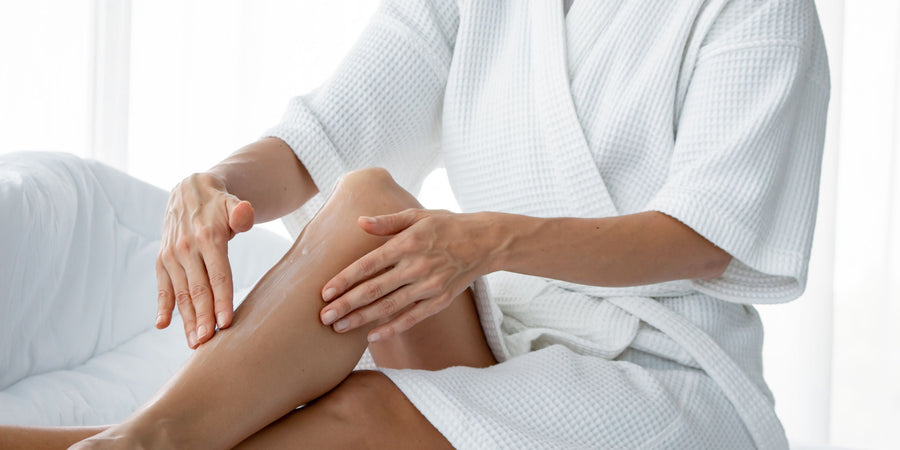

How to Use CBD · Knee & Joint Relief
A research-backed look at whether topical CBD actually eases knee pain — and how to use it if you try.
Aching knees have a way of shrinking your world. Stairs become a negotiation, a morning walk turns into a wince, and standing up from a chair reminds you that something isn't right. It's no surprise that so many people searching for relief end up asking the same question: does CBD cream for knee pain actually work, or is it just hype in a nicely branded jar?
This guide gives you a straight answer grounded in current research. We'll cover what the science really shows, how topical CBD works on the knee, how to choose a quality product, and exactly how to apply it for the best shot at relief.
What Causes Knee Pain and Why People Turn to CBD
Before reaching for any product, it helps to understand what you're actually treating. Knee pain isn't one condition — it's a symptom with many possible sources, and the cause shapes whether a topical is likely to help.
Common Sources of Knee Pain (Arthritis, Injury, Overuse)
Most knee pain falls into a few buckets: osteoarthritis (the "wear and tear" breakdown of cartilage), injury (sprains, meniscus tears, ligament strain), overuse from running or repetitive movement, and inflammatory conditions like rheumatoid arthritis. Osteoarthritis of the knee is especially common and is one of the leading causes of chronic joint pain in older adults.
The Role of Inflammation in Knee Joint Pain
Whatever the trigger, inflammation is usually part of the picture. When the knee joint is irritated, the body floods the area with inflammatory signals that cause swelling, stiffness, and that deep, throbbing ache. This is why so much of the interest in CBD for knee pain centers on its potential anti-inflammatory properties.
Why Topical CBD Appeals to Knee Pain Sufferers
A topical goes exactly where it hurts. Instead of taking a pill that travels through your whole body, you rub a CBD cream directly onto the knee. For people who want localized relief without oral medication — or who are wary of the stomach and liver effects of long-term NSAID use — that targeted approach is a big part of the appeal.
Does CBD Cream Actually Work for Knee Pain?
Here's the honest answer: the evidence is promising but mixed, and it depends heavily on how CBD is delivered.
What the Research Says About CBD and Joint Pain
The research picture is genuinely split, and any guide worth trusting should say so. On the encouraging side, an open-label feasibility trial of transdermal CBD for hand osteoarthritis reported meaningful improvements in self-reported pain, and a separate transdermal CBD gel trial in knee OA patients met secondary endpoints for pain reduction and physical-function improvement even though it missed its primary endpoint.
On the skeptical side, a rigorous randomized, double-blind, placebo-controlled trial in The Lancet Regional Health – Europe found that oral high-dose CBD added no pain relief over placebo for knee osteoarthritis, and a 2025 CBD-rich cannabis oil trial (CANOA) similarly found no significant improvement versus placebo.
CBD for Knee & Joint Pain — What Trials Show by Delivery Method
Illustrative summary of the cited studies. Topical/transdermal delivery has produced more favorable signals than oral CBD for knee OA.
The pattern worth noticing: the more positive signals tend to come from topical and transdermal delivery aimed at a specific joint, while oral CBD has repeatedly underperformed for knee OA. Research is ongoing — a CBD knee osteoarthritis study on ClinicalTrials.gov is specifically investigating topical CBD for this exact use — so expect the evidence base to keep evolving.
How CBD Interacts With the Endocannabinoid System
CBD (cannabidiol) is a non-intoxicating compound from the hemp plant — it won't get you high the way THC does. It's thought to work by interacting with your endocannabinoid system, a network of receptors involved in regulating pain and inflammation. When applied to the skin, CBD engages cannabinoid receptors in local tissue, which is the proposed mechanism behind topical relief.
CBD Cream vs. Oral CBD for Localized Knee Relief
This distinction matters more than most brands admit. Oral CBD goes through first-pass metabolism in the liver, which reduces how much active compound reaches any single joint. A topical skips that, delivering CBD straight to the tissue around the knee. That's precisely why topical delivery is the more logical choice for a localized problem like knee pain — and why the trials on it look more favorable.
How CBD Cream Relieves Knee Pain
If a CBD cream helps you, here's the likely reason it does.
Targeting Inflammation at the Source
Rather than dosing your entire system, a topical concentrates cannabinoids at the painful joint, where they may help calm local inflammatory activity in the surrounding tissue.
The Absorption Path: How Topical CBD Reaches the Joint
When you massage CBD cream into the knee, the cannabinoids absorb through the skin into the underlying tissue and interact with nearby receptors. Most topical CBD stays local — it generally does not enter the bloodstream in meaningful amounts — which is part of why side effects tend to be minimal.
Added Ingredients That Boost Relief (Menthol, Arnica, Camphor)
Many of the best CBD creams for knee pain aren't CBD alone. They pair it with proven topical-relief ingredients:
- Menthol — creates a cooling sensation that distracts from pain signals
- Camphor — a warming counter-irritant often used in muscle and joint rubs
- Arnica — a botanical traditionally used for bruising and soreness
- Capsaicin — derived from chili peppers, used in some formulas for a warming effect
Part of a topical's perceived benefit can come from these companions, so read the full ingredient list rather than just the CBD number on the front.
CBD Cream vs. Other CBD Topicals for Knees
"Cream" is one of several topical formats, and the differences are mostly about texture and how long relief-feeling ingredients linger.
| Topical type | Texture | Best for |
|---|---|---|
| CBD Cream | Light, absorbs quickly | Everyday knee relief, daytime use |
| CBD Salve / Balm | Thick, oil- or wax-based | Longer-lasting spot treatment, dry skin |
| CBD Roll-On | Liquid, mess-free applicator | On-the-go use, no-touch application |
| CBD Lotion | Thin, spreadable | Larger areas, lighter feel |
| CBD Patch | Adhesive, time-released | Slow, steady delivery over hours |
CBD Cream vs. CBD Salve vs. Balm
Creams absorb fast and feel light, which makes them great for daytime. Salves and balms are thicker and stay put longer, so many people prefer them for concentrated overnight relief on a single achy knee.
CBD Roll-On and Lotion for Knee Pain
A CBD roll-on for knee pain is the mess-free option — you glide it on without getting product on your hands, which is handy at the gym or office. Lotions spread easily over larger areas if both knees or surrounding muscles are involved.
When to Choose a Cream Over an Oil or Patch
Choose a cream when you want quick, targeted, reapply-as-needed relief. Consider a patch when you want slow, hands-off delivery over several hours. CBD oil taken orally is a different tool entirely — better suited to whole-body concerns than a single sore joint.
How to Choose the Best CBD Cream for Knee Pain
Quality varies wildly in this category. Use these criteria to separate real products from marketing.
Full-Spectrum vs. Broad-Spectrum vs. Isolate
- Full-spectrum — contains all hemp compounds including trace THC (under 0.3%); some prefer it for the "entourage effect"
- Broad-spectrum — the full range minus THC; a middle-ground choice
- CBD isolate — pure CBD only; best if you want zero THC
CBD Potency and Milligram Strength for Knee Pain
Potency is where knee-pain shoppers get tripped up. Look at total milligrams and the size of the container to gauge concentration. For a stubborn joint like the knee, many people gravitate toward higher-strength creams (1,000 mg and up per jar). Start moderate, see how your knee responds, and increase strength only if needed.
Third-Party Lab Testing and Quality Markers
Never buy a CBD cream without a current Certificate of Analysis (COA) from an independent lab. It verifies the CBD content and confirms the product is free of pesticides, heavy metals, and solvents. Reputable brands make COAs easy to find.
What to Avoid When Buying CBD Cream
Steer clear of products that hide their COA, make disease-cure claims, list CBD vaguely as "hemp extract" without milligrams, or price suspiciously low. If the label won't tell you exactly how much CBD you're getting, that's your answer.
How to Use CBD Cream for Knee Pain
Application technique affects results more than people expect.
How Much CBD Cream to Apply
Start with a dime-to-quarter-sized amount over the knee. There's no universal dose for topicals, so begin small and build up based on how your knee responds rather than slathering on a huge amount at once.
Best Application Technique for the Knee Joint
- Clean and dry the skin around the knee.
- Apply the cream over and around the joint — front, sides, and back of the knee.
- Massage gently for 30–60 seconds until absorbed; the massage itself aids circulation.
- Wash your hands afterward (especially with menthol or capsaicin formulas).
How Long CBD Cream Takes to Work
Most people feel a topical's effect within 15–45 minutes, with cooling or warming sensations often kicking in faster. Give any new cream a fair trial of several days of consistent use before judging it.
How Often to Reapply for Ongoing Relief
Topicals wear off, so reapplication every 4–6 hours (or as the product directs) is normal for ongoing knee relief. Many people apply in the morning, after activity, and before bed.
CBD for Specific Knee Conditions
The right expectations depend on what's driving your pain.
CBD Cream for Knee Arthritis and Osteoarthritis
Arthritis is the most-searched reason people try CBD on their knees. The topical evidence for osteoarthritis is cautiously encouraging but not conclusive — think of a CBD cream as a possible complement to a broader arthritis plan, not a cure.
CBD After Knee Surgery or Replacement
This is a "talk to your surgeon first" situation. Applying anything to healing incisions or a replaced joint carries real considerations, and your surgical team should clear it before you use CBD cream around a knee replacement or fresh surgical site.
CBD for "Bone-on-Bone" and Chronic Knee Pain
For advanced, bone-on-bone osteoarthritis, a topical may take the edge off surface discomfort but won't address the underlying structural problem. Set expectations accordingly and keep your doctor in the loop on a long-term plan.
Is CBD Cream Safe? Side Effects and Considerations
Topical CBD has a reassuring safety profile for most people, but it's not zero-risk.
Potential Side Effects of Topical CBD
The most common issues are mild skin reactions — redness, irritation, or rash — usually from other ingredients rather than CBD itself. Patch-test a new product on a small area first.
Who Should Talk to a Doctor First
If you're pregnant or breastfeeding, take other medications, have a liver condition, or are recovering from surgery, check with a healthcare provider before starting. CBD is generally well tolerated, but individual circumstances matter.
CBD Cream and Drug Test Concerns
Topical CBD is unlikely to cause a positive drug test because it typically doesn't enter the bloodstream. That said, full-spectrum products contain trace THC, so if you're subject to testing, a broad-spectrum or isolate cream is the safer pick.
Frequently Asked Questions
Does CBD cream really help with knee pain?
It may help some people. Research on topical and transdermal CBD for joint pain is cautiously promising, with several trials showing improvement in pain and function, while other rigorous trials — especially of oral CBD — have found no benefit. Results vary by person and product quality.
Can I rub CBD oil directly on my knee?
Yes, you can apply CBD oil or cream directly onto the skin over your knee. Topical products are designed for exactly this, delivering cannabinoids to the local tissue rather than through your whole system.
Is CBD cream good for knee arthritis?
It may offer complementary relief for arthritis-related knee pain. The evidence for osteoarthritis is encouraging but not conclusive, so it's best viewed as one part of a broader arthritis management plan rather than a standalone treatment.
How long does CBD cream take to work on knees?
Most people feel effects within 15 to 45 minutes, with cooling or warming ingredients often kicking in faster. Consistent use over several days gives a fairer sense of whether it's working for you.
Can CBD help with knee inflammation and swelling?
CBD is studied for potential anti-inflammatory properties, and a topical concentrates it at the joint. Evidence is still developing, so it may help reduce discomfort for some people but shouldn't replace medical care for significant swelling.
Can I use CBD cream after a knee replacement?
Only with your surgeon's approval. Applying products near a healing surgical site or replaced joint carries real considerations, so clear it with your surgical team before using CBD cream after knee replacement.
This article is for informational purposes only and is not medical advice. CBD products are not intended to diagnose, treat, cure, or prevent any disease. Talk to a qualified healthcare provider about persistent or severe knee pain before starting any new product.