
How to Use CBD · Fitness & Recovery
CBD is everywhere in the gym bag now — but does it actually help you recover, or just feel like it does? Here's the honest science.
Walk into any gym, and you'll spot CBD balms, roll-ons, and recovery gummies in people's bags. The marketing promises faster recovery, less soreness, better sleep. But if you actually dig into the research on CBD for muscle recovery, you find something more interesting - and more honest - than the ads suggest: the science is genuinely mixed, some of it is promising, and the truth sits somewhere between "miracle recovery hack" and "does nothing." Let's walk through what's real.
What "Recovery" Actually Means After a Workout
To judge whether CBD helps, it helps to know what you're recovering from. Hard training - especially with a heavy eccentric (lengthening) component, like lowering a heavy weight or running downhill - causes microscopic damage to muscle fibers and the connective tissue around them. Your body responds with inflammation, which is a normal and necessary part of repair and adaptation.
That inflammation is also what makes you sore. Delayed onset muscle soreness (DOMS) — the stiffness and tenderness that peaks 24 to 72 hours after a tough session — is driven largely by that inflammatory response, not just the muscle damage itself. And that's the specific window where CBD's proposed anti-inflammatory role becomes interesting.
How CBD Could Help Recovery (The Theory)
The rationale is mechanistic. CBD interacts with CB2 receptors found on immune cells that regulate the body's inflammatory signaling. In cell and animal studies, CBD has been shown to decrease immune-cell accumulation, boost anti-inflammatory cytokines, and reduce pro-inflammatory ones — exactly the kind of activity you'd want to moderate excessive post-exercise inflammation.
Crucially, it's not a sledgehammer like ibuprofen. Some evidence suggests CBD may moderate inflammation without blunting the muscle adaptations that actually make you fitter — a meaningful distinction, since aggressively shutting down all inflammation can interfere with the gains you trained for. That said, this remains an area of active study, not settled fact.
What the Human Research Actually Shows
Here's where honesty matters. The human evidence is limited and inconsistent.
How Strong Is the Evidence for CBD and Recovery?
An honest map of what exists today.
Scale: 4 filled = strong, consistent human clinical evidence.
The studies that found a benefit
Some human research suggests CBD can reduce DOMS after exercise, and newer work is testing topicals specifically. A 2026 randomized, double-blinded pilot study on a topical CBD gel for exercise-induced muscle damage measured muscle-function recovery, soreness, and a blood marker of muscle damage — the kind of rigorous, targeted design the field has been missing.
The studies that didn't
Other research points the other way. Some evidence shows no effect of CBD on DOMS, especially in untrained males. And a 2024 systematic review that screened over 900 publications on CBD, athletic performance, and recovery ultimately found only a handful of studies met strict inclusion criteria — a polite way of saying the high-quality evidence is still thin.
How Active People Actually Use CBD for Recovery
Setting the hype aside, here's how CBD tends to fit into a real routine.
Topical on the muscles you worked
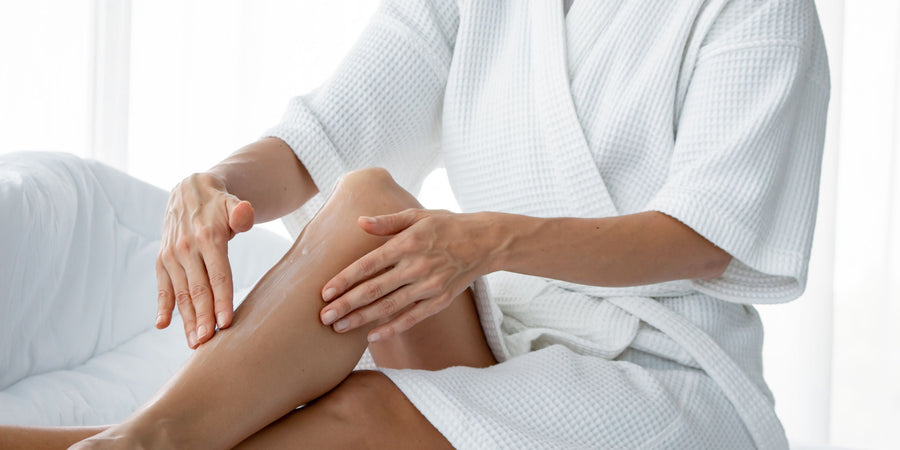
For targeted soreness — legs after squats, shoulders after pressing, calves after a long run — a topical is the logical choice. You apply a salve, balm, or roll-on directly to the sore area, and it stays local. This is the format most gym-goers reach for post-session.
The roll-on for convenience
A roll-on is popular for the gym bag specifically because it's mess-free — you can glide it onto quads or shoulders without getting product on your hands between sets or after a shower.
Oral CBD for the wind-down
Since sleep is where a huge amount of real recovery happens, some people use oral CBD in the evening for general calm and wind-down rather than for the muscles directly. Just note that oral CBD is systemic and not targeted.
Popular formats for recovery
CBD Pain Relief Salve
Worked into sore muscle groups after training for targeted comfort.
Shop salvesCBD Roll-On
Mess-free application for quads, calves, and shoulders on the go.
Shop the roll-onCBD + CBG Salve
A dual-cannabinoid blend some prefer for inflammation-focused soreness.
Shop CBD+CBGCBD Massage Lotion
Spreads easily for working out tightness across larger muscle groups.
Shop the lotionCBD vs. the Recovery Basics
Here's the context the marketing leaves out: the recovery methods with the strongest evidence aren't cannabinoids at all. A large meta-analysis found massage, active recovery, compression, cold-water immersion, and contrast therapy meaningfully reduced DOMS and fatigue — with massage the standout. And nothing beats the fundamentals.
| Method | Evidence for soreness | Role |
|---|---|---|
| Sleep, protein, hydration | Foundational | Non-negotiable base |
| Massage | Strong | Proven |
| Active recovery / cold immersion | Moderate–strong | Proven |
| CBD topical | Mixed / emerging | Possible comfort aid |
Use CBD as a complement on top of the basics — not as a substitute for sleeping, eating, and training sensibly.
The Bottom Line
CBD for post-workout recovery is a case where the research is more honest than the marketing. There's a plausible mechanism, some human studies showing reduced soreness, other studies showing nothing, and a real shortage of large, high-quality trials. If you enjoy how a CBD topical feels on sore muscles and it fits your routine, it's a low-risk complement to real recovery. Just anchor your recovery in sleep, nutrition, and smart programming first — and let CBD be the supporting act it actually is.
Frequently Asked Questions
Does CBD help muscle recovery?
The evidence is mixed. Some studies show CBD can reduce delayed onset muscle soreness (DOMS) after exercise, while others — particularly in untrained people — show no measurable effect. Cell and animal research suggests CBD can moderate the inflammation involved in muscle recovery, but human trials are still limited. It's fair to say CBD may help some people feel less sore, not that it's a proven recovery treatment.
Is CBD good for muscle recovery after workouts?
It may help with the soreness and discomfort side of recovery, which is largely driven by inflammation. A topical applied to worked muscles is the most logical format for targeted post-workout use. Keep expectations realistic — CBD is a comfort aid that fits alongside the proven basics of sleep, protein, hydration, and smart training load, not a replacement for them.
Should I use a CBD topical or take it internally for recovery?
For sore, specific muscles, a topical salve, balm, or roll-on is the sensible choice because you apply it right where you're sore and it stays local. Oral CBD affects the whole body and may suit general post-training calm or sleep, but it isn't targeted. Many active people use a topical on the muscles and reserve oral CBD for evening wind-down.
When should I apply CBD after a workout?
Most people apply a CBD topical to the worked muscles soon after training and again as soreness peaks, which is typically 24 to 72 hours later for DOMS. Reapply every few hours as needed. There's no strict rule — consistency in the day or two after a hard session matters more than precise timing.
Will CBD hurt my training gains or fail a drug test?
Some research suggests CBD reduces inflammation without blunting the muscle adaptations that drive gains, though this is still being studied. On testing: topical CBD stays local and usually doesn't enter the bloodstream in meaningful amounts, but full-spectrum products contain trace THC. If you're a tested athlete, use a broad-spectrum or isolate product and check your sport's specific rules.
Is CBD better than ibuprofen for muscle soreness?
They work differently. Ibuprofen is a direct anti-inflammatory drug, while CBD interacts with the body's endocannabinoid and immune signaling in a gentler, less direct way. Some people prefer CBD to avoid the stomach and other effects of regular NSAID use, but CBD isn't proven to match ibuprofen for soreness. Neither should be used to push through pain that signals injury.
These statements have not been evaluated by the Food and Drug Administration. This product is not intended to diagnose, treat, cure, or prevent any disease. Much of the research referenced is preclinical or early-stage and may not translate directly to individual results. This article is informational only and not medical or training advice. Consult a healthcare provider before starting CBD, especially if you are a competitive or drug-tested athlete.