
How to Use CBD · Tendon & Joint Relief
An honest look at what the research does — and doesn't — show about using topical CBD for inflamed tendons.
Tendonitis is a uniquely stubborn kind of pain. It flares when you use the very thing you need to use — your elbow, your wrist, your Achilles, your shoulder — and it tends to linger for weeks longer than you'd like. So when people go looking for something to take the edge off, CBD cream for tendonitis comes up fast.
The question worth answering isn't whether CBD is popular. It's whether it does anything. This guide gives you the straight version: what the evidence actually supports, what it doesn't, which topical format makes sense for which tendon, and how to use it sensibly alongside the treatments that genuinely resolve tendonitis.
What Tendonitis Is and Why It Hurts
Tendons are the tough, rope-like bands that connect muscle to bone. Tendonitis (also spelled tendinitis) is what happens when one becomes irritated or inflamed — usually from repetitive strain, a sudden increase in activity, or overuse.
Common Types of Tendonitis
- Achilles tendonitis — the cord above the heel; common in runners
- Tennis and golfer's elbow — the tendons on the outside and inside of the elbow
- Wrist tendonitis — frequently from typing, lifting, or repetitive gripping
- Rotator cuff / shoulder tendonitis — from overhead work or throwing
- Patellar tendonitis ("jumper's knee") — below the kneecap
Inflammation vs. Degeneration: Why the Distinction Matters
Here's something most CBD articles skip. Sports medicine has increasingly recognized that a lot of what gets called "tendonitis" is actually tendinopathy — a degenerative breakdown of the tendon's collagen structure rather than a purely inflammatory flare. That matters, because if inflammation isn't the main driver of your pain, an anti-inflammatory approach of any kind — CBD, NSAIDs, ice — has less to work with. It may still ease symptoms. It just isn't fixing the tissue.
Why People Reach for Topical CBD
Tendons are often close to the skin, which makes them a logical target for a topical. Instead of taking something systemic, you can apply a CBD cream, salve, or roll-on directly over the sore tendon. For people wary of long-term NSAID use, that localized approach is the appeal.
Does CBD Help Tendonitis? What the Research Says
Let's be direct, because you deserve a real answer rather than a sales pitch: there are no human clinical trials testing CBD specifically for tendonitis. Anyone telling you CBD is proven for tendon pain is getting ahead of the evidence.
What we do have is indirect and worth understanding on its own terms.
How Strong Is the Evidence for CBD and Tendonitis?
An honest map of what exists — and what doesn't.
Scale: 4 filled = strong human clinical evidence. Nothing in the CBD-tendonitis space currently reaches that bar.
The Animal Research on CBD and Tendon Healing
The most directly relevant study is a pilot study in a Sprague Dawley rat Achilles tendon surgical repair model. Researchers wanted to know whether cannabinoids interfere with tendon repair — a fair worry, given how many athletes use them. The finding: neither CBD nor THC altered the biomechanical strength of the healing tendons compared to control, leading the authors to conclude that cannabinoids do not appear to adversely affect Achilles tendon healing.
Read that carefully, because it's a reassurance, not an endorsement. The study says CBD probably won't sabotage a healing tendon. It does not say CBD helps one heal. That's a meaningful distinction, and it's the most honest thing the current research offers.
What We Can Borrow From Joint Pain Research
The closest useful evidence comes from adjacent conditions. In osteoarthritis research, topical and transdermal CBD has produced more encouraging signals than oral CBD — an open-label trial of transdermal CBD for hand osteoarthritis reported improvements in self-reported pain, while rigorous trials of oral CBD for knee osteoarthritis, including one in The Lancet Regional Health – Europe, found no benefit over placebo.
The transferable lesson: if you're going to try CBD for a localized tendon problem, a topical is the format with the better rationale behind it.
The Honest Verdict
How Topical CBD Would Work on an Inflamed Tendon
The Endocannabinoid System and Local Receptors
CBD (cannabidiol) is a non-intoxicating hemp compound — it won't get you high the way THC does. It's thought to interact with the endocannabinoid system, a receptor network involved in regulating pain and inflammation. Applied to skin, CBD engages cannabinoid receptors in the local tissue, which is the proposed mechanism behind any topical effect.
Why Tendons Are Well Suited to a Topical
Many commonly affected tendons — Achilles, wrist, elbow — sit close to the surface with little tissue between skin and tendon. That's a better scenario for a topical than a deep joint. Most topical CBD stays local rather than entering the bloodstream in meaningful amounts, which is also why side effects tend to be minimal.
The Supporting Ingredients Doing Real Work
Be aware that a good portion of what you feel from a tendonitis topical may not be the CBD at all:
- Menthol — cooling counter-irritant that competes with pain signals
- Camphor — warming sensation common in muscle and joint rubs
- Arnica — botanical traditionally used for soreness and bruising
- Capsaicin — chili-derived warming agent used in some formulas
This isn't a knock on CBD topicals — it's a reason to read the whole ingredient list rather than fixating on the milligram number on the front of the jar.
CBD Cream vs. Salve vs. Roll-On for Tendonitis
All three put CBD in the same place. Pick based on which tendon is bothering you.
| Format | Best for | Why |
|---|---|---|
| CBD Roll-On | Achilles, elbow, wrist | Reaches awkward spots without mess; no hand contact |
| CBD Cream | Daytime, any tendon | Absorbs fast, light feel, easy to reapply |
| CBD Salve / Balm | Overnight, single spot | Thick and stays put; good for concentrated use |
| CBD Lotion | Broader areas | Spreads easily over surrounding muscle |
Best Pick for Achilles and Elbow Tendonitis
A roll-on is hard to beat here. Achilles tendonitis in particular means bending down and applying to a spot that rubs against socks and shoes — a roll-on applicator handles that cleanly.
Best Pick for Wrist and Shoulder Tendonitis
A fast-absorbing cream makes sense for wrists, since you'll want to get back to using your hands without residue. For shoulders, a salve or balm applied at night works well when you're not moving much.
How to Choose a CBD Product for Tendon Pain
Potency: What Strength Makes Sense
Look at total milligrams and container size to judge concentration — a 1,000 mg jar and a 1,000 mg stick are not the same product. For a small, superficial tendon, you don't necessarily need the highest strength on the shelf. Start moderate and increase only if you're not getting anything from it.
Full-Spectrum, Broad-Spectrum, or Isolate
- Full-spectrum — all hemp compounds including trace THC (under 0.3%)
- Broad-spectrum — the full range minus THC
- CBD isolate — pure CBD only; the pick if you're drug tested
Third-Party Lab Testing (Non-Negotiable)
Never buy a CBD topical without a current Certificate of Analysis from an independent lab. It verifies the CBD content and screens for pesticides, heavy metals, and solvents. If a brand makes the COA hard to find, that's your answer.
Red Flags to Avoid
Skip anything that claims to "heal" or "cure" tendonitis, lists CBD vaguely as "hemp extract" with no milligrams, hides its lab results, or prices far below the market. Cure claims are both a quality signal and a legal one — legitimate brands don't make them.
How to Use CBD Cream for Tendonitis
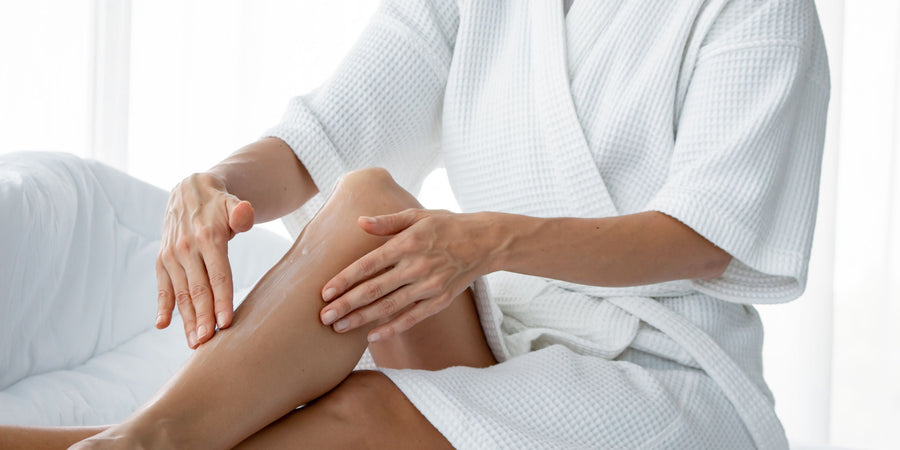
Application, Step by Step
- Clean and dry the skin over the tendon.
- Apply a dime-sized amount directly over the sore area and just above and below it.
- Massage gently for 30–60 seconds — the massage itself helps circulation.
- Wash your hands after, especially with menthol or capsaicin formulas.
- Reapply every 4–6 hours, or as the product directs.
How Long It Takes to Feel Something
Most people notice a topical within 15–45 minutes; cooling ingredients register faster. Give a new product several days of consistent use before deciding whether it's doing anything for you.
Timing Around Activity and Rehab
Many people apply after activity and before bed. One caution worth taking seriously: if a topical makes a tendon feel good enough that you push through a workout you should have skipped, it has actively hurt you. Pain is information during tendon recovery. Don't mask the signal that's telling you to modify your load.
What Actually Treats Tendonitis
A CBD topical is a comfort measure. These are the things with real evidence behind them, and they belong in your plan regardless of what's in your medicine cabinet:
- Relative rest and load management — reducing the aggravating activity without going fully sedentary
- Progressive loading exercise — eccentric and isometric work is the cornerstone of modern tendon rehab
- Physical therapy — for technique correction and a structured loading program
- Ice and topical analgesics — symptom relief during flares
- Time — tendons are slow-healing tissue; recovery is measured in weeks to months
Safety, Side Effects, and When to See a Doctor
Potential Side Effects
Topical CBD is generally well tolerated. The most common issue is mild skin reaction — redness, irritation, rash — usually from other ingredients rather than CBD itself. Patch-test a new product on a small area first, and don't apply to broken skin.
Drug Testing
Topical CBD is unlikely to trigger a positive drug test since it typically doesn't reach the bloodstream. Full-spectrum products do contain trace THC, so if you're tested, choose broad-spectrum or isolate.
Frequently Asked Questions
Does CBD cream help tendonitis?
It may help with the discomfort for some people, but there are no human clinical trials testing CBD specifically for tendonitis. Evidence comes from animal research and studies on related joint and inflammatory pain, so CBD cream is best viewed as a possible comfort measure alongside proven treatments like rest, loading exercises, and physical therapy.
Is CBD good for tendonitis?
CBD is studied for potential anti-inflammatory and pain-modulating properties, and a topical concentrates it near the affected tendon. Research specific to tendonitis in humans is lacking, so it may ease discomfort but will not repair the tendon or replace rehabilitation.
Can CBD help heal a tendon?
There is no evidence that CBD heals tendons in humans. A pilot study in a rat Achilles tendon repair model found that CBD did not change the biomechanical strength of healing tendons compared to control, meaning it neither helped nor harmed the repair. Tendons heal through appropriate loading and time, not topicals.
Which is better for tendonitis: CBD cream, salve, or roll-on?
All three deliver CBD to the same place, so the choice comes down to the tendon involved. A roll-on suits hard-to-reach spots like the Achilles or elbow and keeps hands clean. A cream absorbs quickly for daytime use. A salve or balm is thicker and stays put longer, which many people prefer overnight.
How long does CBD cream take to work on tendonitis?
Most people notice a topical's effect within 15 to 45 minutes, and cooling ingredients like menthol are felt sooner. Give a new product several days of consistent use before deciding whether it helps your tendon pain.
Can I use CBD cream for Achilles or wrist tendonitis?
Yes. Topical CBD can be applied over any superficial tendon, including the Achilles, wrist, elbow, shoulder, or patellar tendon. Tendons that sit close to the skin are the most logical candidates for a topical, since the product does not have to travel far.
Is CBD cream safe to use with tendonitis?
Topical CBD is generally well tolerated, with mild skin irritation being the most common issue, usually from other ingredients rather than CBD. Do not apply it to broken skin, patch test first, and talk to a healthcare provider if you take other medications or your tendon pain is severe or worsening.
This article is for informational purposes only and is not medical advice. CBD products are not intended to diagnose, treat, cure, or prevent any disease. Tendon injuries can worsen without appropriate care — talk to a qualified healthcare provider about persistent, severe, or sudden-onset tendon pain.