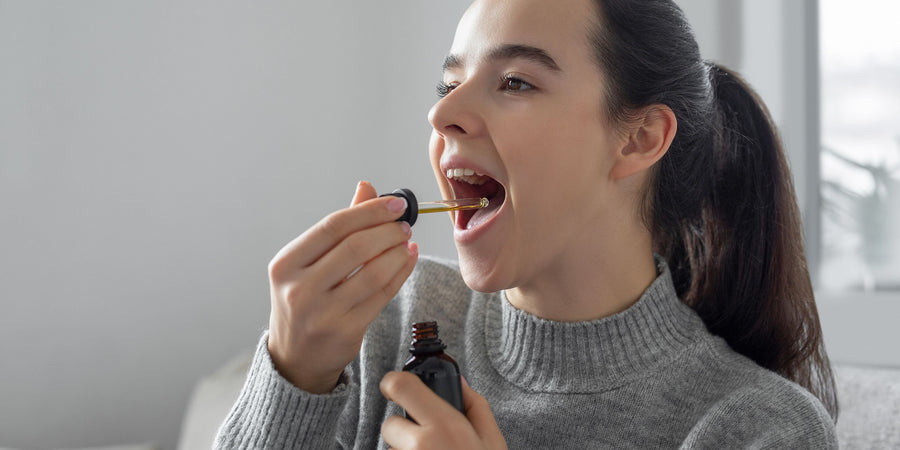

The promise of a truly restorative night's sleep often feels elusive. While traditional sleep aids can lead to morning grogginess or dependence, many people are turning to minor cannabinoids like Cannabinol (CBN) for natural support. If you are searching for the best CBN dose for insomnia or simply want to optimize your evening ritual, you’ve come to the right place.
Determining the optimal CBN dosage for sleep is not a simple matter of reading a label. It requires understanding your body, the product type, and a strategic, consistent approach. This guide provides a science-backed, step-by-step nightly protocol to help you find your personalized "sweet spot" for deep, uninterrupted rest.
Understanding Cannabinol (CBN) as a Sleep Aid
CBN is a minor cannabinoid that forms when THC breaks down due to exposure to heat and oxygen. While early anecdotal evidence, the "sleepy weed" urban legend—made CBN famous, modern research is just now confirming its potential benefits.
What Makes CBN the "Sleepy Cannabinoid"?
Unlike the psychoactive THC or the balancing CBD, CBN is thought to have unique properties. Limited clinical research, including a study comparing CBN to melatonin, suggests that CBN, particularly in moderate doses, may be effective in improving overall sleep quality and reducing the number of awakenings during the night.
The Role of CBN in the Endocannabinoid System (ECS)
CBN primarily supports sleep by interacting with the body's Endocannabinoid System (ECS), a complex regulatory network that manages everything from mood to appetite and, critically, your sleep-wake cycle.
CBN shows a lower affinity for the CB1 receptors (unlike THC), meaning it is non-intoxicating and will not produce a "high." Its potential to promote relaxation and deep rest is believed to stem from its influence on both CB1 and CB2 receptors, subtly helping to regulate the internal balance required for a smooth transition into sleep.
CBN vs. Melatonin: How They Differ in Action and Half-Life
Many people wonder if CBN is merely a natural melatonin alternative. While both aid sleep, their mechanisms are different:
| Feature | CBN (Cannabinol) | Melatonin |
| Primary Action | Interacts with the ECS to promote calm and sleep continuity. | A hormone that signals the body it’s time to sleep (circadian rhythm). |
| Tolerance/Habit | Low risk of tolerance when dosed properly (MED). | Can lead to tolerance/dependence over long-term, high-dose use. |
| Sensation | Promotes physical and mental calm. | Primarily signals sleep onset; may cause morning grogginess in high doses. |
Clinical trials suggest that CBN can be statistically equivalent to, or even slightly better than, melatonin for improving sleep quality in certain doses, with a similar favorable safety profile.

Finding Your Minimum Effective Dose (MED): The Titration Method
There is no standardized FDA-approved dose for CBN, which means figuring out how much CBN for sleep is best for you requires a personalized approach. Your perfect amount will depend on your unique metabolism, body weight, and existing cannabinoid tolerance.
Why Dosing CBN Isn't One-Size-Fits-All
The dose of any cannabinoid is highly dependent on two key internal factors:
- Metabolism: Individuals with a faster metabolism may clear CBN from their system quicker, potentially requiring a slightly higher dose or earlier administration.
- Cannabinoid Sensitivity: If you are sensitive to other cannabinoids, you will likely respond well to a low dose of CBN.
Titration: Your "Start Low, Go Slow" Guide to CBN Dosage
The best way to determine your optimal CBN dosage is through the scientific process of titration—a fancy word for starting low and slowly increasing your dose until you achieve the desired results with the fewest side effects.
Here is the four-step CBN titration method:
- Establish a Baseline: Start with a very conservative effective CBN sleep dosage, typically between 5 mg and 10 mg of CBN per night.
- Maintain Consistency: Take this initial dose nightly for a period of 3 to 5 consecutive nights at the same time. Do not increase the dose yet.
- Evaluate and Adjust: After the initial period, evaluate your sleep. Are you falling asleep faster? Are you experiencing fewer nighttime awakenings? If you have not reached your sleep goal, increase the dosage by a small increment (e.g., 2.5 mg or 5 mg).
- Find the MED: Continue increasing the dose every 3–5 nights until you find the sweet spot—the Minimum Effective Dose (MED)—that provides you with restful sleep without causing morning side effects.
Recommended CBN Starting Dose Based on Body Weight
While titration is essential, you can use body weight as a general guide to determine your initial starting point:
| Body Weight (lbs) | Suggested Starting Dose (mg) | Common Effective Range (mg) |
| < 130 lbs | 5 – 10 mg | 10 – 15 mg |
| 130 – 200 lbs | 10 – 15 mg | 15 – 20 mg |
| > 200 lbs | 15 – 20 mg | 20 – 30 mg |
How Much CBN for Sleep? Dosage by Product Type
The format of your CBN product significantly impacts absorption and duration, which are crucial factors when planning your CBN nightly protocol.
Calculating CBN Dosage in Tinctures (The Dropper Math)
CBN tinctures offer the most precise control over your dose, which is ideal for the titration method.
-
The Math: To calculate the CBN per dropper, divide the total milligrams (mg) of CBN in the bottle by the volume in milliliters (mL).
-
Example: A 1000 mg CBN tincture in a 30 mL bottle contains approximately 33 mg of CBN per 1 mL dropper.
-
This allows you to measure fractions of a dropper to hit your exact dose (e.g., a quarter-dropper for 8.25 mg).
-
- Absorption: Tinctures are taken sublingually (under the tongue) and offer a higher bioavailability, meaning more of the compound is absorbed directly into the bloodstream.
Dosing CBN Gummies for Sleep: Understanding Oral Bioavailability
Dosing CBN gummies for sleep is straightforward because they are pre-measured (e.g., 10 mg or 25 mg per gummy), making consumption highly consistent.
- Bioavailability: Gummies must pass through the digestive system and liver metabolism (the "first-pass effect"), which lowers their bioavailability compared to tinctures. This often means the effects take longer to feel, but they can last longer.
- Consistency: While you can't micro-dose as accurately as with oil, the fixed dose ensures consistency night after night.

Optimal Timing: How Long Before Bed Should I Take CBN Oil or Edibles?
Timing is paramount for a successful CBN protocol. The goal is to have the CBN reach its peak concentration in your bloodstream just as you are ready to fall asleep.
| Product Type | Absorption Onset Time | Optimal Timing Before Bed |
| Tincture/Oil (Sublingual) | 15–45 minutes | 30 minutes before lights out |
| Gummies/Edibles (Oral) | 45–90 minutes | 60 minutes before lights out |
✨ Maximizing Sleep Benefits: The Entourage Effect and Synergy
For many users, CBN is most effective when combined with other hemp compounds, leveraging the synergistic relationship known as the entourage effect.
CBN in Combination with CBD: Dosing for Enhanced Calm and Sleep
While CBN is great for sedation and sleep continuity, CBD (Cannabidiol) is known for its anxiety-reducing and calming properties. Combining them provides a dual benefit:
- CBD for Calm: Reduces the mental stress that causes sleeplessness.
- CBN for Sleep: Promotes the physical mechanisms of deeper rest.
Many leading sleep formulas utilize ratios like 5:1 or 2:1 CBD:CBN. When using a combination product, focus on the total effective CBN sleep dosage while ensuring the added CBD dose aligns with your wellness goals. Recent studies suggest that low-dose CBN (e.g., 15 mg) added to CBD may not enhance sleep benefits beyond what CBD achieves alone, highlighting the potential need for higher CBN concentrations or standalone use.
The Role of Terpenes in Your Nightly Protocol
Terpenes are aromatic compounds in the hemp plant that contribute to the entourage effect. For a sleep protocol, look for products enhanced with:
- Myrcene: Known for its sedating, muscle-relaxing properties.
- Linalool: Found in lavender, known for its calming, anxiety-relieving effects.
A comprehensive product will utilize these terpenes and minor cannabinoids to bolster the overall efficacy of your CBN dose.
Safety and Long-Term Use: Side Effects and Tolerance
CBN has a favorable safety profile, but it is important to be mindful of its effects, particularly when implementing a long-term nightly protocol.
Signs You've Taken Too Much CBN (And How to Adjust)
If you overshoot your optimal CBN dosage, the most common side effect is morning grogginess or feeling excessively drowsy upon waking.
If this occurs, simply reduce your dose by 25% that same evening, or delay your dose until closer to bedtime. The goal of using CBN is to wake up feeling refreshed, not fatigued.
Addressing Potential CBN Tolerance Build-Up
Consistent, high-dose use of any cannabinoid can potentially lead to some CBN tolerance build-up. To mitigate this:
- Stay at the MED: Once you find the Minimum Effective Dose, stick to it. Avoid increasing the dose just because the results aren't as strong as the first night.
- Take a T-Break (Tolerance Break): If you notice the effects diminishing after months of use, consider a short 3-day break from CBN to reset your ECS sensitivity.
Important Considerations: CBN and Other Sleep Aids
Always consult a healthcare professional before introducing CBN if you are taking prescription sleep aids or medications. Preclinical research suggests that CBN can inhibit the metabolism of certain drugs, which could potentially increase their effects.
Next Steps: Implementing Your Effective CBN Sleep Dosage Routine
Finding your optimal CBN dosage for sleep is a journey, not a destination. By following the "start low, go slow" principle and being consistent with your CBN nightly protocol, you can achieve truly restorative sleep.
The key to success lies in tracking your results, adjusting your dose based on product type (tincture vs. gummy), and leveraging the power of the entourage effect. Consistency, particularly over the first 2–3 weeks, is necessary for your ECS to adapt and fully integrate CBN into your sleep cycle.
Final Takeaway: Ensuring a Safe and Restful Night's Sleep
CBN is a promising, non-intoxicating tool for improving sleep continuity and overall rest. Start with a low dose (5–10 mg), choose a high-quality product that details its CBN concentration, and be patient. A little science, a lot of patience, and the right dose can make all the difference in achieving the deep sleep you deserve.
Frequently Asked Questions (FAQ)
Q: Is 10mg of CBN enough to help me sleep?
A: Yes, for many first-time users and those sensitive to cannabinoids, 10mg of CBN is an excellent starting dose. Clinical studies have shown effective results ranging from 10mg up to 50mg, but 10mg is a standard minimum effective dose (MED) to begin titration before increasing.
Q: How long before bed should I take CBN oil?
A: You should take CBN oil, or any sublingual tincture, approximately 30 minutes before your planned bedtime. This allows the CBN to absorb through the capillaries under your tongue and reach peak concentration in your bloodstream right as you are preparing to fall asleep.
Q: Does CBN dosage change based on body weight?
A: Body weight is a key factor that influences your personalized CBN dosage. Larger individuals often have a higher volume of distribution, meaning they may require a higher starting dose (e.g., 15–20mg) compared to smaller individuals (e.g., 5–10mg) to achieve the same therapeutic effect, necessitating adjustment in the CBN nightly protocol.
Q: Why am I groggy after taking CBN for sleep?
A: Morning grogginess after taking CBN usually indicates that your dose is too high. This is a common sign you have exceeded your minimum effective dose (MED). To fix this, reduce your dosage by 25-50% for the next few nights to find an amount that promotes sleep without residual daytime drowsiness.