
If you've been dealing with chronic pain, post-workout soreness, or the kind of deep joint ache that makes mornings difficult, you've probably heard someone mention CBD. But amid all the wellness buzz, one question keeps coming up: does CBD actually help with pain — and if so, how?
The honest answer is yes, but it's more nuanced than most articles let on. CBD doesn't work the way ibuprofen does, numbing pain signals wholesale. Instead, it works with your body's own biology — a distinction that makes all the difference in how you use it and what results you can realistically expect.
This guide covers everything: the real science behind CBD and pain relief, which types of pain respond best, how to choose the right format and potency, and the dosage guidance that most brands are too cautious to give you.
What Is CBD and Why Do People Use It for Pain?
CBD — short for cannabidiol — is a naturally occurring compound found in the hemp plant. Unlike THC, the compound most associated with cannabis, CBD produces no intoxicating effects. It won't get you high, impair your judgment, or show up on a standard drug test when sourced from compliant, hemp-derived products.
What CBD does do is interact with a complex biological network in the human body called the endocannabinoid system (ECS) — and that interaction is at the heart of why so many people are turning to it as a natural pain management tool.
The Difference Between CBD, THC, and Hemp Extract
These terms are often used interchangeably in wellness marketing, but they refer to distinct things:
- Hemp extract is the full range of compounds pulled from the hemp plant — including CBD, minor cannabinoids like CBG and CBN, terpenes, and flavonoids.
- CBD (cannabidiol) is one specific cannabinoid within that extract, and typically the most abundant.
- THC (tetrahydrocannabinol) is the psychoactive cannabinoid. Legal hemp-derived CBD products contain less than 0.3% THC — not enough to produce any intoxication.
For pain relief, broad spectrum and full spectrum hemp extracts tend to outperform pure CBD isolates, thanks to the "entourage effect" — the synergy between multiple cannabinoids and terpenes working together.
Why People Turn to CBD Over Traditional Pain Medication
The appeal isn't hard to understand. NSAIDs like ibuprofen and naproxen are effective short-term but carry real risks with long-term use: gastrointestinal bleeding, kidney stress, and cardiovascular strain. Opioids carry even greater risks — dependency, tolerance buildup, and a devastating withdrawal profile.
CBD offers a non-opioid, plant-based alternative that growing numbers of researchers and clinicians are taking seriously as a complementary approach to pain management. It's not a silver bullet, but for many people, it's become a meaningful part of how they manage day-to-day pain.
How Does CBD Work for Pain? Understanding the Endocannabinoid System
To understand how CBD relieves pain, you need a basic map of the endocannabinoid system (ECS). Think of the ECS as your body's internal thermostat for balance — regulating everything from mood and sleep to immune response and, critically, pain perception.
The ECS is made up of three components:
- Endocannabinoids — molecules your body produces naturally (anandamide and 2-AG being the primary ones)
- Receptors — CB1 and CB2 receptors distributed throughout the brain, nervous system, and immune tissue
- Enzymes — that break down endocannabinoids after they've done their job
CBD doesn't bind directly to CB1 or CB2 receptors the way THC does. Instead, it modulates the system — slowing the breakdown of your body's own endocannabinoids, activating other pain-relevant receptors, and dampening inflammatory signaling.
CB1 and CB2 Receptors: Where CBD Does Its Work
CB1 receptors are concentrated in the brain and central nervous system. They play a major role in how pain signals are processed and perceived. While THC binds directly to CB1 receptors, CBD modulates their activity indirectly — helping to quiet overactive pain signaling without the intoxication.
CB2 receptors are found primarily in immune cells and peripheral tissues. They're the receptors most associated with inflammation — and CBD has a notably strong affinity for modulating CB2 activity. This is a central reason CBD is effective for inflammatory pain conditions like arthritis, muscle injury, and tissue damage.
2020 Review · Frontiers in Pharmacology
CBD's modulation of both central and peripheral cannabinoid receptors contributes meaningfully to pain reduction across multiple pain models, with a favorable tolerability profile.
CBD and Anandamide: Your Body's Natural Pain-Relief Molecule
Anandamide — nicknamed the "bliss molecule" after the Sanskrit word for joy — is one of the body's most important endocannabinoids. It binds to CB1 receptors and plays a significant role in regulating pain, mood, and stress responses.
Here's the key: CBD inhibits the enzyme FAAH (fatty acid amide hydrolase), which is responsible for breaking down anandamide. By slowing anandamide degradation, CBD effectively increases the amount of this natural pain-modulating molecule circulating in your system. This is one of the reasons CBD can produce a calm, mood-lifting effect alongside physical relief.
The Anti-Inflammatory Pathway: How CBD Targets the Source of Pain
Many of the most persistent, debilitating types of pain — arthritis, back injuries, repetitive strain — are rooted in inflammation. CBD addresses this upstream, not just at the point of sensation. Specifically, CBD has been shown to:
- Inhibit COX-2 enzymes — the same target as NSAIDs like ibuprofen, but through a different pathway
- Reduce cytokine production — inflammatory signaling proteins that sustain and amplify tissue inflammation
- Modulate prostaglandin synthesis — lipid compounds that sensitize pain receptors at injury sites
- Activate TRPV1 receptors — ion channels that regulate pain sensitivity and body temperature
2015 Study · European Journal of Pain
Transdermal CBD application significantly reduced joint swelling and pain-related behavior in arthritic animal models — with no observed adverse side effects.
What Types of Pain Does CBD Actually Help With?
CBD isn't a one-size-fits-all solution, but its mechanisms make it broadly applicable across several distinct pain categories.
CBD for Chronic Pain and Long-Term Conditions
Chronic pain — defined as pain lasting longer than three months — affects an estimated 50 million Americans annually. For many, conventional treatments offer incomplete relief or intolerable side effects.
Conditions that have shown the most consistent response in clinical and survey research include:
- Fibromyalgia — widespread musculoskeletal pain with strong neurological components
- Rheumatoid arthritis — immune-mediated joint inflammation
- Multiple sclerosis-related pain — spasticity and neuropathic pain
- Chronic lower back pain — a leading cause of disability worldwide
CBD for Nerve Pain and Neuropathy
Neuropathic pain — caused by damaged or misfiring nerves — presents as burning, shooting, or electric sensations and is common in conditions like diabetes, shingles, and sciatica. It's notoriously difficult to treat with conventional analgesics.
CBD's interaction with TRPV1 and serotonin (5-HT1A) receptors makes it particularly relevant here.
2017 Review · Pain Research and Management
Cannabinoids show promise in reducing neuropathic pain intensity with a favorable safety profile compared to existing neuropathic pain medications.
CBD for Joint Pain, Arthritis, and Inflammation
Arthritis is among the most studied applications for CBD. CB2 receptors are densely expressed in synovial tissue (the lining of joints), which may explain why topical CBD application is often reported as effective for localized joint pain. A combination approach — topical applied directly to affected joints plus a daily oral dose for systemic support — is increasingly common among functional medicine practitioners.
CBD for Back Pain and Muscle Soreness
Post-exercise soreness is largely driven by microtrauma and the subsequent inflammatory response — precisely the pathway CBD targets. Applied topically to sore muscles after training, a high-concentration CBD salve or roll-on can reduce localized inflammation, ease tension, and support faster recovery. Explore our full range of CBD pain relief products.
CBD for Sciatica, Carpal Tunnel, and Repetitive Strain
Repetitive strain injuries involve both inflammation and nerve irritation. CBD addresses both components simultaneously — which is why it's gaining traction among office workers, manual laborers, and anyone dealing with overuse injuries. For these conditions, a targeted topical roll-on applied directly to the wrist, elbow, or lower back provides localized relief without systemic side effects.
CBD Formats for Pain Relief: Which One Is Right for You?
How you take CBD matters as much as how much you take. Different formats deliver cannabinoids through different routes, with different onset times and coverage profiles.
| Format | Onset time | Duration | Best for |
|---|---|---|---|
| Topical salve / cream | 15–45 min | 4–6 hours | Localized joint & muscle pain |
| Roll-on | 10–30 min | 3–5 hours | Targeted spot relief, portability |
| Tincture (sublingual) | 15–30 min | 4–6 hours | Full-body, systemic relief |
| Gummies / edibles | 45–90 min | 6–8 hours | Long-lasting overnight relief |
| Capsules | 45–90 min | 6–8 hours | Consistent daily dosing |
CBD Topicals, Salves, and Roll-Ons: Targeted Pain Relief
For localized pain, a topical CBD product is often the most direct and effective option. Applied directly to the skin, cannabinoids penetrate through transdermal absorption to reach the tissue and receptors beneath. Potency matters significantly — a 300mg product spread across a 4oz jar is effectively homeopathic at the site of application.
10× the cannabinoid density of most retail products. 50/50 CBD + CBG blend for maximum anti-inflammatory action. Lab-tested, USA-grown hemp.
CBD Oil and Tinctures: Full-Body Systemic Relief
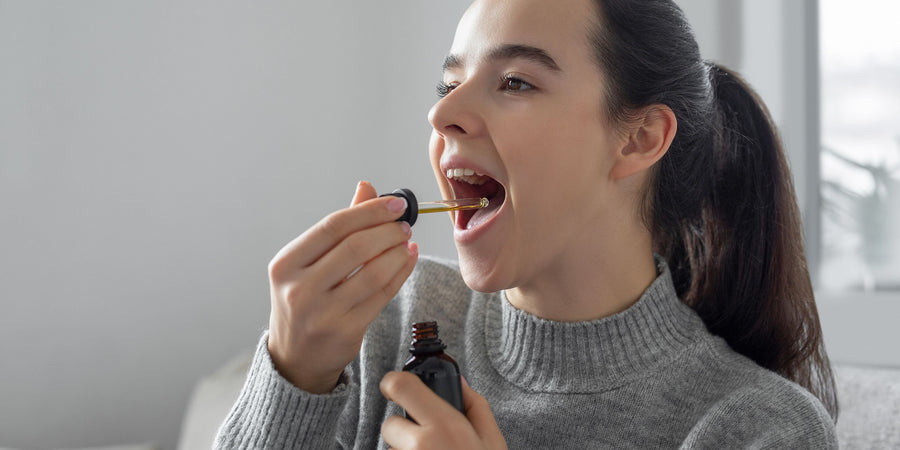
CBD tinctures taken sublingually absorb directly into the bloodstream through the mucous membranes, bypassing digestion for faster onset. Full spectrum tinctures are generally preferred for pain over isolates, because the full range of cannabinoids and terpenes produces a more complete therapeutic effect.
CBD Gummies and Capsules: Convenient Daily Pain Management
Edibles and capsules take longer to work but their effects last longer — 6 to 8 hours in most users. This makes them ideal for managing overnight pain that disrupts sleep, maintaining consistent CBD levels throughout a workday, or first-time users who prefer measured, familiar dosing formats.
High-Potency CBD: When to Consider Extra-Strength Formulas
For people managing severe chronic pain, post-surgical recovery, or conditions that haven't responded to lower doses, high-potency CBD formulas are in a different category entirely. Higher potency means more cannabinoid molecules available per application for deeper tissue penetration and longer-lasting receptor engagement.
How Long Does CBD Take to Work for Pain?
One of the most common frustrations new CBD users report is expecting instant results and giving up too early. Here's a realistic expectation framework:
Onset Time by Format: Topical vs. Tincture vs. Edible
- Topicals: 15–45 minutes for localized relief; some users report near-immediate warmth and tension reduction within 10 minutes
- Tinctures: 15–30 minutes sublingually; 45–60 minutes if swallowed
- Edibles/capsules: 45–90 minutes; varies based on metabolism, body weight, and recent food intake
For chronic conditions, acute onset time is only half the picture. CBD often works cumulatively — building up in lipid-rich tissues over days to weeks of consistent use before its full anti-inflammatory and analgesic effects stabilize.
How Often Should You Use CBD for Pain Relief?
Most pain-specific CBD protocols suggest twice-daily dosing for consistent systemic coverage:
- Morning dose — tincture or capsule to establish baseline cannabinoid levels
- As-needed topical — applied directly to pain sites throughout the day
- Evening dose — edible or capsule for overnight anti-inflammatory support and sleep quality
How Much CBD Should You Take for Pain?
There's no universal answer because CBD response is influenced by body weight, pain severity, metabolism, and the specific condition being treated.
Starting Doses: Finding Your Minimum Effective Amount
A widely-cited starting framework is 1–6mg of CBD per 10 pounds of body weight per day, starting at the low end and titrating up over two weeks. For a 160-pound person, that's an initial daily dose of approximately 16–25mg.
- Start low and increase gradually every 3–5 days
- Keep a simple pain diary to track response
- Allow at least 2 weeks before evaluating efficacy
- Separate topical use from oral intake — they don't contribute to the same systemic dose
High-Potency CBD for Severe or Chronic Pain: What the Research Suggests
For moderate-to-severe chronic pain, research and clinical practice data suggest higher doses may be necessary. A 2018 review in Frontiers in Neurology found that CBD doses ranging from 15mg to 600mg daily were used across pain studies, with chronic pain patients in higher-severity categories often requiring 50–150mg/day for consistent benefit.
All Bloomstem formulations are independently tested and available for review on our third-party lab reports page — so you know exactly what's in every product.
Is CBD Safe? Side Effects, Interactions, and What to Watch For
CBD has a well-established safety profile. The World Health Organization's 2018 critical review concluded that CBD is generally well tolerated with a good safety profile and does not appear to have abuse potential.
Common side effects, when they occur, are mild:
- Dry mouth
- Mild fatigue (usually dose-dependent)
- Temporary changes in appetite
- Loose stools at very high doses
CBD Drug Interactions: What You Need to Know
CBD is metabolized by the cytochrome P450 enzyme system in the liver — the same pathway used by many common medications, including blood thinners, certain anticonvulsants, and some antidepressants. If you're taking prescription medications, consult your healthcare provider before beginning a CBD regimen. This is especially important for anticoagulants like warfarin, where dosing precision is critical.
CBD vs. Opioids and NSAIDs: An Honest Comparison
| CBD | NSAIDs | Opioids | |
|---|---|---|---|
| Addiction potential | None documented | None | High |
| Long-term organ risk | Low | Moderate (GI, kidney, cardiovascular) | High (liver, CNS) |
| Anti-inflammatory | Yes | Yes | No |
| Neuropathic pain | Yes | Limited | Limited |
| OTC availability | Yes | Yes | No (prescription) |
Choosing the Best CBD for Pain: What to Look for Before You Buy
Not all CBD products are equal. Knowing what to evaluate before purchasing can mean the difference between a product that works and one that doesn't.
Full Spectrum vs. Broad Spectrum CBD for Pain: Which Works Better?
- Full spectrum contains all cannabinoids found in the hemp plant, including trace THC (<0.3%). The entourage effect makes full spectrum extracts generally more potent and effective for pain.
- Broad spectrum contains multiple cannabinoids but with THC removed. Still produces entourage effects — the right choice for those who need to avoid THC entirely.
- CBD isolate is pure CBD with no other compounds. Effective for some applications but typically less potent for pain management than whole-plant extracts.
Why Lab Testing and COA Transparency Matters
A Certificate of Analysis (COA) from an accredited third-party laboratory is non-negotiable. It verifies:
- Cannabinoid potency — confirming the product actually contains what the label claims
- Heavy metals and pesticide screening — safety markers for USA-grown hemp
- Microbial contaminants — ensuring manufacturing hygiene
- THC levels — confirming legal compliance
Never buy from a brand that doesn't make COAs readily accessible. All Bloomstem products are batch-tested and results are published on our third-party lab reports page.
Our Top Picks for CBD Pain Relief at Bloomstem
| Pain type | Recommended product | Why it works |
|---|---|---|
| Severe muscle / joint pain | 10,000mg CBD + CBG Salve | Ultra-high potency topical; 50/50 CBD+CBG for max anti-inflammatory action |
| Chronic systemic pain | Full Spectrum 20K CBD Oil | High-dose oral for full-body ECS support |
| Active recovery / portability | CBD + CBG Roll-On 10,000mg | Fast-absorbing, mess-free targeted relief |
| Overnight / sleep-disrupted pain | CBN Grape PM Tincture | CBN adds sleep support alongside pain management |
Explore the full CBD pain relief collection or visit our cannabinoid guide to learn more about how each cannabinoid contributes to your wellness.
Frequently Asked Questions
Does CBD actually help with pain?
Yes — research and extensive user data both support CBD's effectiveness for pain, particularly inflammatory and neuropathic pain. CBD interacts with the endocannabinoid system to reduce inflammation, modulate pain receptor activity, and slow the breakdown of anandamide, the body's own pain-modulating molecule. Results vary by condition, dosage, and product quality.
How long does CBD take to work for pain?
It depends on the format. Topicals typically produce localized relief within 15–45 minutes. Sublingual tinctures work in 15–30 minutes. Edibles and capsules take 45–90 minutes due to digestion. For chronic conditions, consistent daily use over 1–2 weeks often produces the most significant cumulative results.
What is the best CBD format for pain relief?
Topicals are best for localized pain (joint, muscle, back). Tinctures are best for systemic or widespread pain. Edibles and capsules work well for long-duration relief and sleep-disrupted pain. Many users combine formats — a daily tincture for baseline support plus a topical salve applied to specific pain sites.
How much CBD should I take for pain?
A common starting framework is 1–6mg of CBD per 10 pounds of body weight per day, starting low and increasing gradually. For chronic or severe pain, research suggests 50–150mg/day orally may be needed for meaningful relief. Topical dosing is separate — higher-potency products (10,000mg+) are recommended for serious localized pain.
Will CBD make me feel high?
No. CBD is non-intoxicating. Even full spectrum products contain less than 0.3% THC — not enough to produce any psychoactive effect. CBD topicals don't enter the bloodstream at all, making them completely non-intoxicating regardless of potency.
Is CBD safe to use with pain medications?
CBD is generally well tolerated, but it is metabolized by the same liver enzymes as many prescription medications. If you take blood thinners, anticonvulsants, or other medications with narrow therapeutic windows, consult your healthcare provider before adding CBD to your regimen.
What strength CBD do I need for chronic pain?
For mild to moderate chronic pain, products in the 750mg–3,000mg range (tinctures) or 1,000mg–5,000mg (topicals) are a reasonable starting point. For severe chronic pain, high-potency formulations — 10,000mg+ topicals or 50mg+ daily oral doses — are more likely to produce meaningful relief based on current dosing research.
These statements have not been evaluated by the Food and Drug Administration. This product is not intended to diagnose, treat, cure, or prevent any disease. Consult your healthcare provider before beginning any new supplement regimen, particularly if you are pregnant, nursing, or taking prescription medications.